
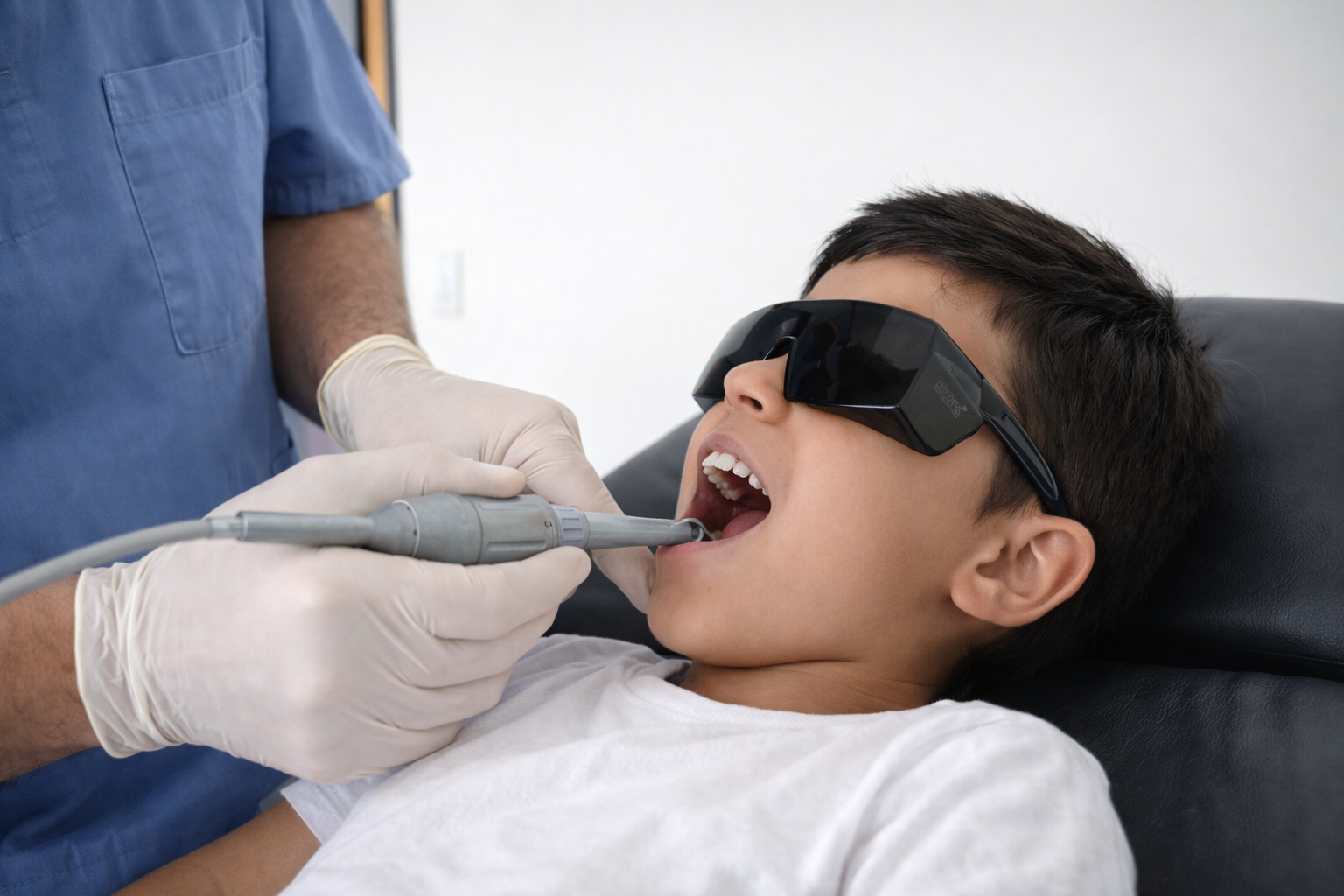
What is OraLase®?
OraLase® is a non-invasive, low-level laser therapy used to release fascial tension in the face, mouth, neck and airway. OraLase® works by stimulating the body’s own healing response, improving circulation, reducing inflammation, and softening restricted fascia.
Many families describe OraLase® as pressing a reset button on the system:
- Fascia softens and becomes more responsive
- Muscles can lengthen and coordinate more easily
- The tongue gains functional mobility, not just range
The nervous system often shifts into a calmer, more regulated state. By reducing fascial drag, OraLase® allows the tongue and lips to move the way they were designed to, rather than fighting against stored tension.
OraLase® is a protocol of using infrared light of a specific wavelength to reboot the cranial nerves that are involved in supplying information between the brain and the facial,oral and dental tissues. There are 12 cranial nerves and the largest is the trigeminal nerve. The tissues of the face and mouth send information via the trigeminal nerve to the brainstem where other key centres such as breathing and autonomic nervous system centres lie.
The specific wavelength is critical as it allows deeper penetration of the laser light into the interface between the fascia and the nervous system without overheating the tissues closer to the surface.
It works through a process known as photobiomodulation, meaning the light energy is absorbed by photoreceptors within cell membranes and cellular organelles.
This results in effects that include increased microcirculation, stimulation of the lymphatic system, increased activity of macrophages and fibroblasts, and changes in nerve action potentials.
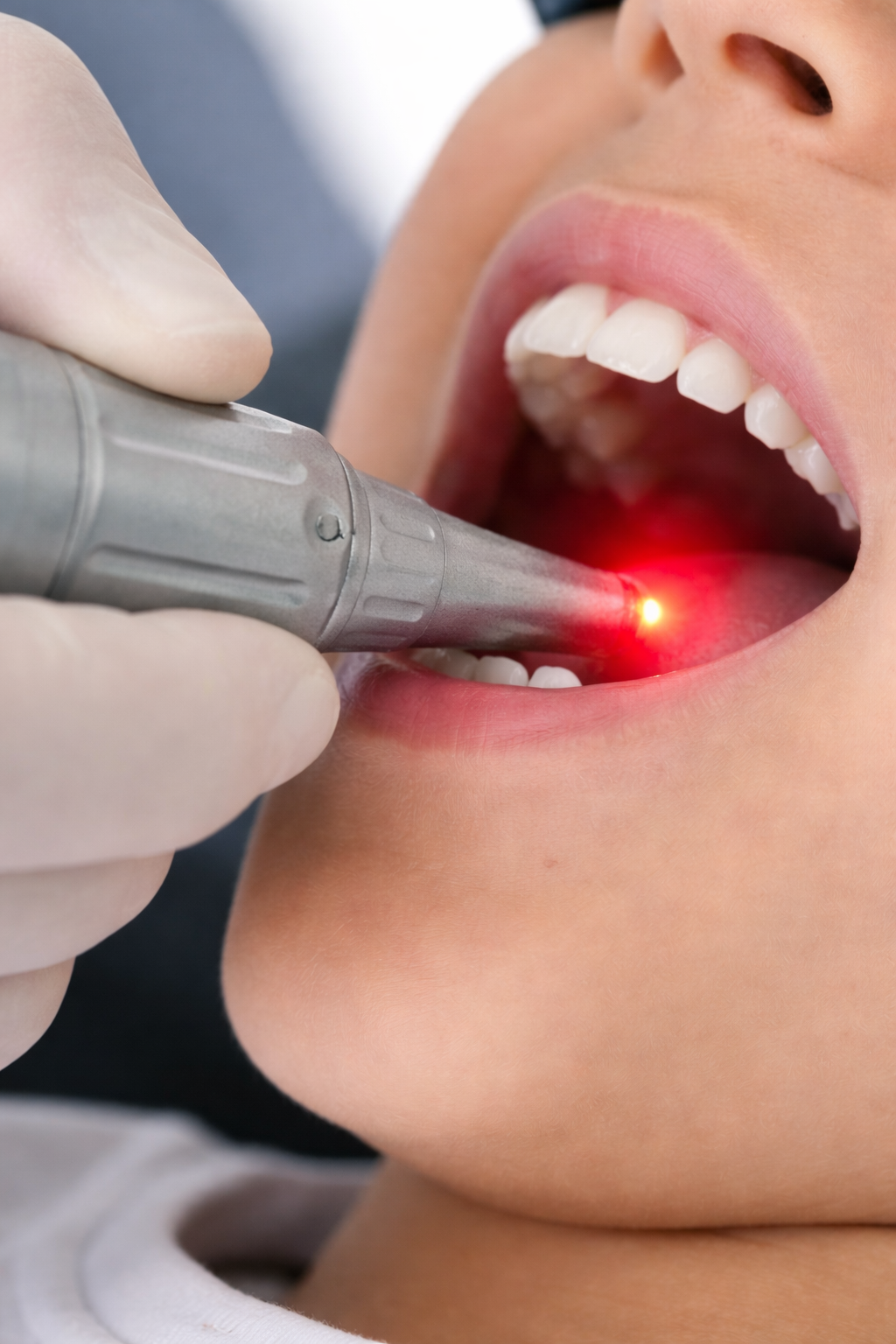
The protocol involves passing the laser light over various specific points on the hands as well as key structures in the orofacial region. The sensation is a gentle warm feeling as the light touches the skin, much like a warm shower.
OraLase® is essentially a rebooting of the software (neurology) that controls the hardware (orofacial hard and soft tissues). To borrow the analogy of the cardiac system from Angie Tenholder DDS, the defibrillator is the OraLase® protocol, the CPR is the manual therapy (osteopathy, FaceGym, and chiropractic), and the pacemaker is the ALF appliance and dental guides.
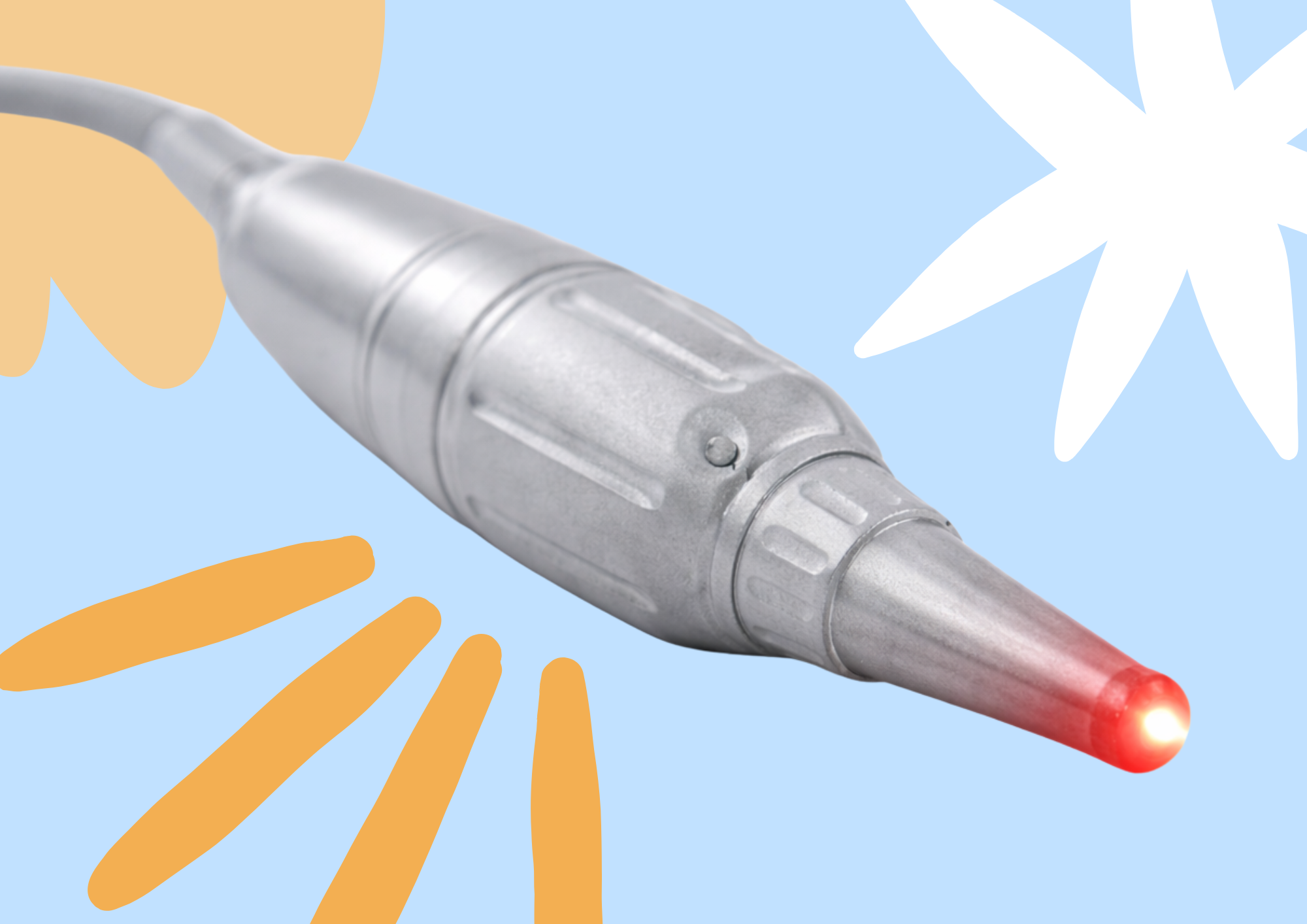
How does OraLase fit into treatment at The Quantum Kid?
At The Quantum Kid and Sydney Functional Dentistry , the combination of the ALF appliance, cranial osteopathy, Facegym and OraLase® addresses the complex physical maladaptations from childhood traumas. Using forces that mimic nature, they collectively promote the natural rhythmic integrative function of the oral neuromusculature as well as the cranial sutures.
Whether you are a child or an adult, because of the stimulation of the brains largest cranial nerve, the trigeminal, OraLase® is essentially a rebooting of the software (neurology) that controls the hardware (orofacial hard and soft tissues). It’s acts as a spark that ignites a brainstem reset and kicks off the flow of life force. Supportive osteopathy and/or chiropractic keeps the life force flowing and dental appliances (if you are using them) amplify the healing.
OraLase and oral restrictions
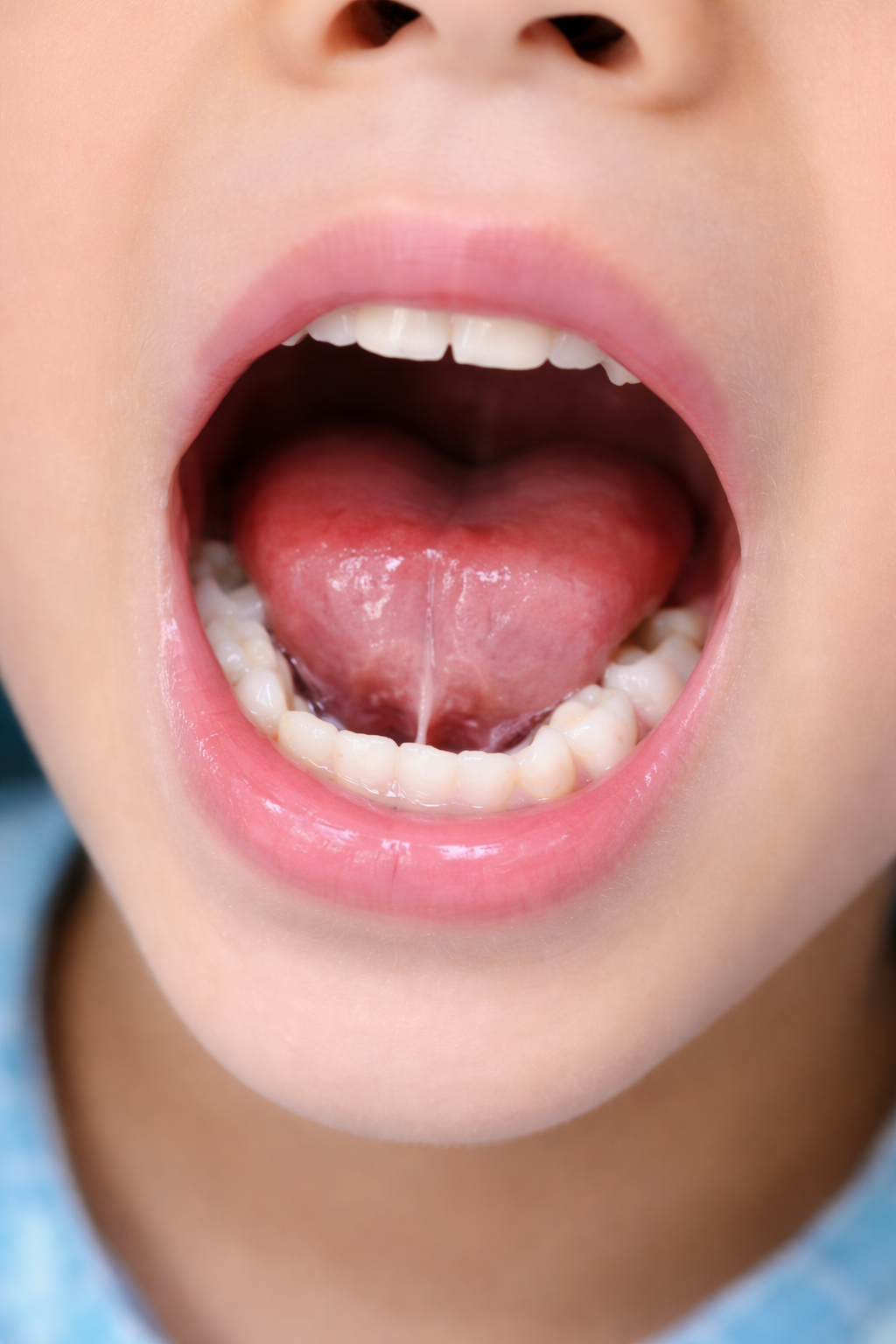
In the world of breathing, jaw development, sleep health, dental crowding, enlarged adenoids and tonsils as well as the general health of our children, the topic of tongue ties is commonly explored. And rightly so! The tongue is a key structure in breathing, speech, swallowing, jaw development, posture...just to name a few. Not to mention that there are 12 cranial nerves that exit the brain, and five of those either supply nerve information to and/or from the tongue. It’s a really important structure. The tongue is also connected to fascia that are in our big toe’s!
So the tongue is important, but what happens if it’s restricted? The first thing to consider is the nature of the tongue restriction. Is it a fascial restriction, a neurological restriction or a structural restriction. There is much more to consider than just a simple snip under the tongue.
It’s also important to appreciate that tongue ‘ties’ are not a band of tissue, they are a fold in a complex fascial web that forms the floor of the mouth. In most scenarios of tongue restriction, it makes little sense to surgically cut a fold of fascia in isolation. It makes much more sense to help the body unfold it. And that is what OraLase® does.
Let’s dive deeper…
The OraLase® protocol is not about tongue and lip tie releases. It’s about understanding what is the foundation underpinning a supposed imbalance in the oronasal neuromusculature.
There are multiple disturbances which can individually or collectively contribute to what we would regard as a maladaptation of the oral tissues. These can include perinatal traumas, early childhood traumas, structural traumas that result in cranial strains as well as previous treatments and interventions. The cumulative effect of these disturbances is that they take a kid’s natural tools for event integration and resilience offline. This pre-disposes them for unsuccessful integration of future events and limbic hypervigilance aka “anxiety” which has become alarmingly common in kids.
We end up maladaptations that can be neurological (eg poor integration of primitive reflexes), structural (cranial strains/compressions, dental crowding), functional (mouthbreathing, poor posture, low tongue posture) and emotional (hypersensitive emotionally, sensitive nervous system.
The ALF and dental guides, in concert with cranial osteopathy and chiropractic care, is great at addressing the complex structural maladaptations. This helps to facilitate improvements in breathing, posture, cranial bone motion, jaw development, and much more.
However the dental appliances and supportive manual therapy is sometimes unable to address the neurological maladaptations.
This is where OraLase® takes centre stage.
OraLase FAQs
What is the cost and how do I book?
Call 9923 2478 or book online to schedule in your child’s OraLase® sessions. The cost is $275 a session which is payable upon booking.
Who is the practitioner performing the OraLase Treatment?
Cole Clayton, the Co-Founder and Lead Osteopath at The Quantum Kid will perform the OraLase® Protocol. Cole has been trained in the OraLase Protocol in America.
Does OraLase hurt?
OraLase® typically does not hurt and your child will feel a warm sensation. We start on the hand and work slowly into the mouth.
Does OraLase address enlarged tonsils?
We do perform OraLase® around the tonsils which has been shown in a published case study to help reduce tonsils but it may not be an alternative to surgery. OraLase® can be an excellent adjunct alongside other therapies. Dr Lisa Huynh also does offer a Tonsilase protocol which is more specific in targeting the tonsils. This can take place on separate days and in conjunction with OraLase®.
Does OraLase address tongue tie?
OraLase® may not be a replacement for surgery. In cases of severe tongue tie we may still refer to one particular surgeon only. We have seen in cases that the patient and parent is not willing to have the surgery we have seen notable improvements in range of motion that do “hold” over time.
Why are four sessions necessary?
This staged approach allows the body to adapt, reduces overwhelm to the nervous system, and supports better functional outcomes.
What shall I plan before and after?
Do not plan anything else on the day of your child’s OraLase® treatment and consider not sending your child back to school after the treatment. We advise to return home after treatment and have some down-time for the rest of the day.
How may I expect my child to feel after OraLase?
OraLase® works deeply on the nervous system and fascia, so we recommend planning a quiet, low- demand day, ideally both before and especially after your child’s session. Some children may feel tired, emotionally sensitive, or more inward as their body integrates the release. Calm home time, gentle activities, hydration, and minimal stimulation support this process and allow the treatment to be most effective. Think of it as giving the body space to settle, reorganise, and reset - rather than rushing straight back into busy schedules.
Your child may be sleepy, they may fall asleep, they may appear normal, can be a lot quieter, they may be emotional, they may have a “tantrum” and be calm afterwards. This is not predictable and every treatment is different. These responses usually pass quickly as the body integrates the change.